
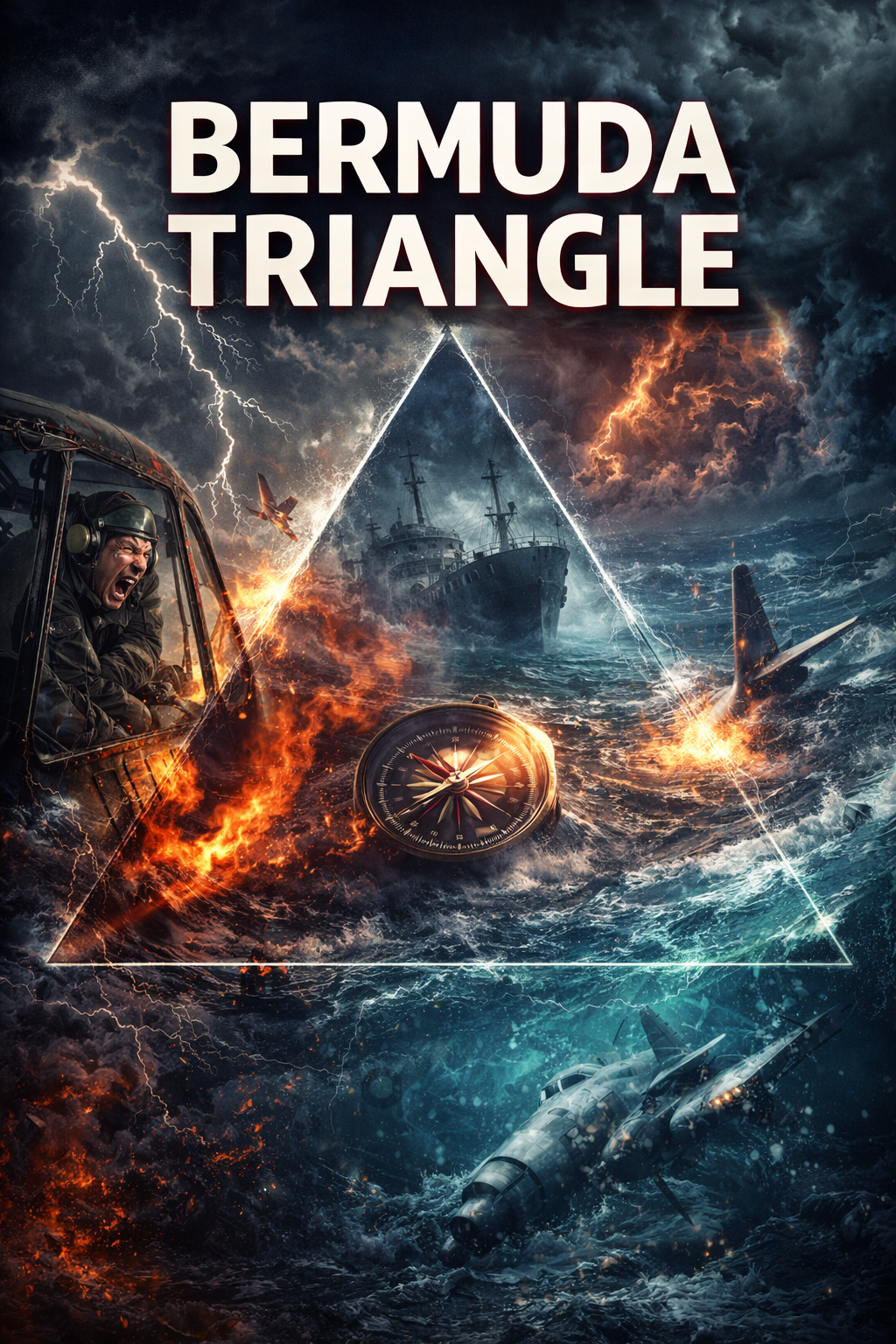
The Bermuda Triangle, also known as the Devil’s Triangle, is a loosely defined area of the North Atlantic Ocean where a significant number of ships and aircraft have reportedly disappeared under unusual circumstances. While no official boundaries exist, the area is commonly outlined by the points of Miami (Florida), Bermuda, and Puerto Rico, forming a triangular shape spanning roughly 500,000 to 1,500,000 square miles.
This region is geologically and meteorologically complex. The Gulf Stream, a powerful and fast-moving ocean current, passes through the triangle, making it one of the busiest shipping lanes in the world. Additionally, the area is prone to sudden storms, tropical cyclones, and unpredictable weather patterns, which can dramatically affect navigation. Magnetic anomalies in some sections of the triangle have also been reported, sometimes affecting compasses and navigation instruments.
- Triangle points: Miami → Bermuda → Puerto Rico
- Approximate area: 500,000–1,500,000 square miles
- Key ocean feature: Gulf Stream, known for strong currents and waves
- Weather hazards: hurricanes, tropical storms, sudden squalls
- Navigational concerns: reports of compass variations and instrument malfunctions
- High-traffic zone: busy shipping and commercial flight routes intersect here
- Depth variability: deep ocean trenches and underwater ridges complicate maritime travel
Summary:
The Bermuda Triangle is a geographically complex region in the western Atlantic, where ocean currents, deep-sea trenches, magnetic anomalies, and extreme weather combine to create hazardous navigation conditions. Its boundaries are generally defined by Miami, Bermuda, and Puerto Rico, making it a highly traveled yet mysterious part of the ocean.
Famous Disappearances and Incidents:

The Bermuda Triangle has been associated with numerous mysterious disappearances of ships and aircraft over the past century. While many of these events have natural explanations, their frequency and unusual circumstances have fueled legends. Some of the most notable incidents include military, commercial, and private vessels, as well as aircraft that vanished without clear cause.
One of the earliest reported incidents involved the USS Cyclops in 1918, a massive Navy cargo ship that disappeared with 309 crew members aboard while traveling from Barbados to Baltimore. No wreckage or distress signals were ever found. Another famous event is the disappearance of Flight 19, a group of five U.S. Navy torpedo bombers in 1945, whose pilots became lost during a training mission; all 14 airmen vanished, along with a rescue plane sent after them. Civilian vessels, such as the Carroll A. Deering in 1921, also disappeared under mysterious circumstances.
- USS Cyclops (1918): Navy cargo ship, 309 crew lost, no wreckage found
- Flight 19 (1945): Five torpedo bombers, 14 airmen disappeared
- Carroll A. Deering (1921): Commercial schooner, found abandoned near Cape Hatteras
- Star Tiger (1948) & Star Ariel (1949): British passenger planes, vanished over the Atlantic
- Douglas DC-3 (1948): Commercial flight lost with 32 people aboard
- Incidents span ships and aircraft, both military and civilian
- Many disappearances occurred without distress calls or wreckage discovery
These events contributed to the Bermuda Triangle’s reputation as a region of unexplained phenomena. Despite extensive investigations, the combination of severe weather, navigational challenges, and human error is thought to account for the majority of incidents, though myths and paranormal theories continue to capture public imagination.
Summary:
The Bermuda Triangle is infamous for high-profile disappearances, including the USS Cyclops, Flight 19, and the Carroll A. Deering. While environmental and human factors explain most incidents, the lack of conclusive evidence has perpetuated the mystery and intrigue surrounding the region.
also read: Epstein Files Explained: What They Are, What They Contain, and Legal Meaning
Scientific Explanations Behind the Mystery:
Despite its legendary status, many of the disappearances in the Bermuda Triangle can be explained through scientific and environmental factors rather than paranormal causes. Researchers have studied the region’s unique combination of oceanography, meteorology, and human navigation challenges to understand why ships and aircraft have vanished.
One significant factor is the Gulf Stream, a powerful ocean current capable of rapidly moving vessels off course. Combined with sudden tropical storms and hurricanes, even experienced crews can find themselves in peril. Another explanation involves methane hydrates, gas deposits on the ocean floor that can erupt and reduce water density, causing ships to sink unexpectedly. Magnetic anomalies, which can occasionally affect compass readings, also contribute to navigational errors. Human factors, such as pilot disorientation, mechanical failure, and miscalculations, further explain many incidents.
- Gulf Stream currents: Strong, fast-moving, can divert ships and aircraft
- Severe weather: Hurricanes, tropical storms, sudden squalls causing rapid hazards
- Methane hydrate eruptions: Can reduce water density, potentially sinking vessels
- Magnetic anomalies: Rare compass deviations may cause navigational errors
- Human error: Pilot disorientation, poor navigation, mechanical failures
- Most disappearances have logical, scientific explanations when analyzed
- Combines multiple factors: environmental + technical + human
Studies by organizations like the National Oceanic and Atmospheric Administration (NOAA) and maritime research institutes indicate that when these natural elements intersect, they create conditions that can be extremely hazardous, especially for small ships or aircraft with limited experience in the region.
Summary:
Scientific research shows that the Bermuda Triangle’s hazards—strong Gulf Stream currents, sudden storms, methane eruptions, magnetic anomalies, and human error—can explain most disappearances. While the myths persist, environmental and navigational factors account for the majority of incidents.
Paranormal and Conspiracy Theories:
Despite scientific explanations, the Bermuda Triangle remains one of the world’s most famous mysterious regions, inspiring numerous paranormal and conspiracy theories. Popular culture often attributes the disappearances to alien abductions, time warps, or lost civilizations, particularly the mythical Atlantis, believed by some to have advanced technology capable of affecting ships and aircraft. These explanations, while entertaining, lack empirical evidence and are largely based on speculation.
Other theories involve electromagnetic anomalies disrupting instruments, or unusual underwater vortices that could drag vessels to the ocean floor. Some enthusiasts suggest government cover-ups or secret military experiments as contributing factors, though these claims remain unverified. The blend of high-profile disappearances, limited wreckage, and dramatic storytelling has fueled public fascination and enduring myths.
- Atlantis theory: Lost civilization with mysterious technology affecting vessels
- Alien abductions: Extraterrestrial interference in human travel
- Time warps or portals: Sci-fi explanation for vanishing ships and planes
- Electromagnetic anomalies: Compass deviations and instrument malfunctions
- Government conspiracies: Secret experiments or cover-ups
- Pop culture exaggerates events, blending fact with fiction
- Paranormal theories persist despite scientific debunking of most cases
While paranormal explanations are popular in media, most experts agree that environmental, technical, and human factors remain the most plausible causes of incidents in the Bermuda Triangle. The fascination continues because the mystery captures imagination and curiosity, making the region a cultural icon.
Summary:
Paranormal and conspiracy theories—ranging from alien abductions to lost civilizations—have popularized the Bermuda Triangle mythos. Despite their appeal, scientific evidence overwhelmingly supports natural and human factors as the primary causes of the reported disappearances.
Safety Considerations for Travelers:
For those curious about the Bermuda Triangle, traveling through the region is generally safe, especially when adhering to modern navigation and aviation standards. Millions of ships and aircraft cross the area each year without incident. The perceived danger mostly stems from historical incidents exaggerated by myths rather than actual risk. Understanding natural hazards and following standard safety measures ensures safe passage.
Modern vessels and aircraft are equipped with advanced navigation systems, radar, GPS, and weather monitoring tools, significantly reducing risks. Severe weather, including hurricanes and sudden squalls, remains the most genuine threat, and travelers are advised to check forecasts and avoid storms. Additionally, smaller boats should be cautious of strong currents from the Gulf Stream.
- Air travel: Commercial and private flights use GPS and radar for safe navigation
- Sea travel: Modern ships have sonar, satellite guidance, and weather tracking
- Weather hazards: Check hurricane and storm alerts before traveling
- Avoid isolated areas: Stick to well-trafficked routes when boating
- Emergency preparedness: Life jackets, emergency communication, and navigation backup
- Historical risks: Many incidents involved outdated equipment or inexperienced crews
- The Bermuda Triangle does not pose a unique danger compared to other busy ocean regions
Despite its fearsome reputation, the Bermuda Triangle is no more dangerous than other parts of the Atlantic when proper precautions are taken. Travelers who respect natural elements, follow navigation guidelines, and stay informed about weather conditions can safely explore or pass through the region.
Summary:
With modern navigation, communication, and weather monitoring, traveling through the Bermuda Triangle is generally safe. Awareness of currents, storms, and maritime best practices ensures that myths about danger remain just that—myths.
Bermuda Triangle in Pop Culture:
The Bermuda Triangle has captured the imagination of writers, filmmakers, and media for decades, becoming a symbol of mystery and unexplained phenomena. Its stories appear in books, documentaries, films, and television shows, often emphasizing dramatic disappearances and paranormal theories rather than scientific explanations. This cultural portrayal has helped cement the region’s legendary status worldwide.
Authors like Charles Berlitz, who popularized the term “Bermuda Triangle” in his 1974 book, contributed to public fascination by blending fact with speculation. Movies and TV series often depict alien abductions, time warps, or supernatural forces, reinforcing the triangle’s mysterious reputation. Even video games and documentaries continue to explore its allure, demonstrating the persistent intrigue across generations.
- Books: Charles Berlitz’s “The Bermuda Triangle” (1974), Rob MacGregor novels
- Films: “The Triangle” (2001), “Bermuda Triangle” (1978), and other sci-fi thrillers
- Television: Documentaries by National Geographic and Discovery Channel
- Video games & media: Mysteries inspired by triangle disappearances
- Themes: Alien abductions, paranormal phenomena, lost civilizations, mysterious disappearances
- Popular culture often blurs fact and fiction, amplifying myths
- Cultural fascination fuels continued tourism interest and media exploration
While the media often exaggerates the danger, pop culture has ensured the Bermuda Triangle remains a household name, synonymous with mystery and intrigue. These portrayals have also inspired interest in oceanography, navigation, and historical investigations, bridging entertainment and education.
Summary:
The Bermuda Triangle’s presence in books, films, documentaries, and games has made it a cultural icon. While myths dominate media portrayals, these stories continue to spark curiosity and interest in real-world science and history.
Conclusion:
The Bermuda Triangle remains one of the most intriguing regions in the Atlantic Ocean, blending fact, legend, and speculation. While high-profile disappearances—such as the USS Cyclops, Flight 19, and the Carroll A. Deering—have fueled myths, scientific explanations like strong Gulf Stream currents, sudden storms, methane hydrate eruptions, magnetic anomalies, and human error account for most incidents.
Today, the Bermuda Triangle continues to captivate public imagination through books, films, documentaries, and games, reinforcing its place in popular culture. Modern navigation and safety measures make travel through the region generally safe, showing that the mystery lies more in perception than in actual danger. Understanding both the facts and the folklore allows us to appreciate the Bermuda Triangle as a fascinating intersection of oceanography, history, and human curiosity.
FAQs:
1. Where is the Bermuda Triangle located?
The Bermuda Triangle is roughly bounded by Miami (Florida), Bermuda, and Puerto Rico, forming a triangular area in the western North Atlantic Ocean.
2. Why do ships and planes disappear there?
Most incidents are explained by severe weather, strong ocean currents, mechanical failures, and human error, although myths suggest paranormal causes.
3. Is the Bermuda Triangle real or just a myth?
The Bermuda Triangle is real as a geographic region. However, most of the “mystery” is exaggerated by folklore and media, while scientific explanations account for the majority of incidents.
4. Are disappearances in the Bermuda Triangle still happening?
While occasional incidents occur, modern navigation, GPS, and weather tracking have drastically reduced the frequency of accidents. Most disappearances historically involved outdated equipment and inexperienced crews.
5. Can I safely travel through the Bermuda Triangle?
Yes. Millions of ships and flights pass safely every year. Travelers should follow weather advisories, navigation best practices, and emergency preparedness.
6. Why does the Bermuda Triangle remain so famous in culture?
Books, films, documentaries, and games have popularized dramatic stories, alien theories, and paranormal ideas, blending fact and fiction to capture public imagination.
References / Citation List:
- National Oceanic and Atmospheric Administration (NOAA). “Bermuda Triangle: Myths and Facts.” https://www.noaa.gov
- Berlitz, Charles. The Bermuda Triangle. Grosset & Dunlap, 1974.
- U.S. Navy Historical Records. “USS Cyclops and Other Bermuda Triangle Incidents.
- National Geographic. “Bermuda Triangle: Mysterious Disappearances.” https://www.nationalgeographic.com